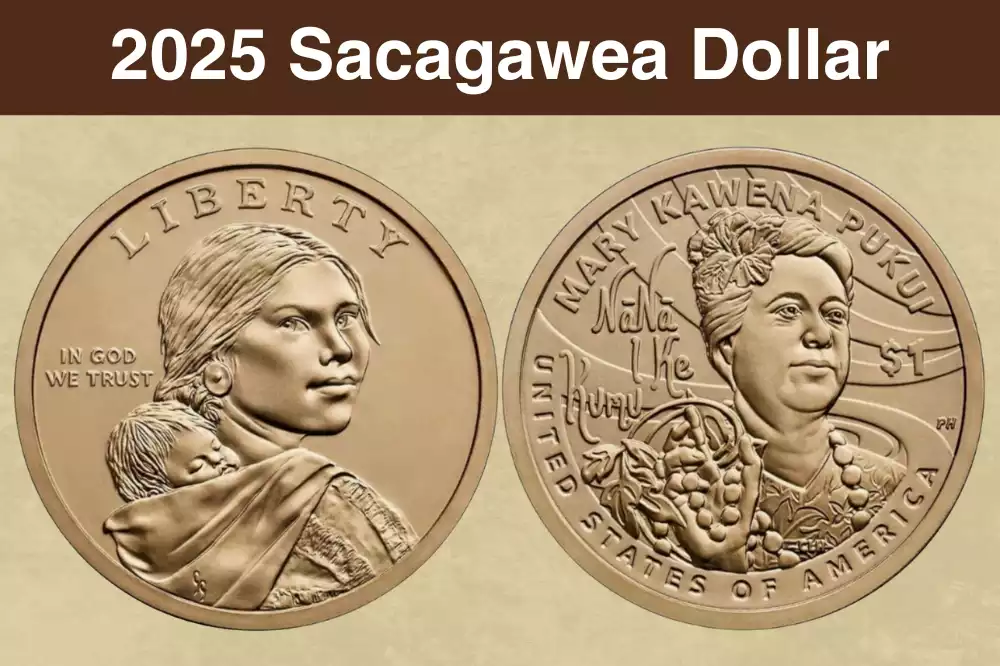
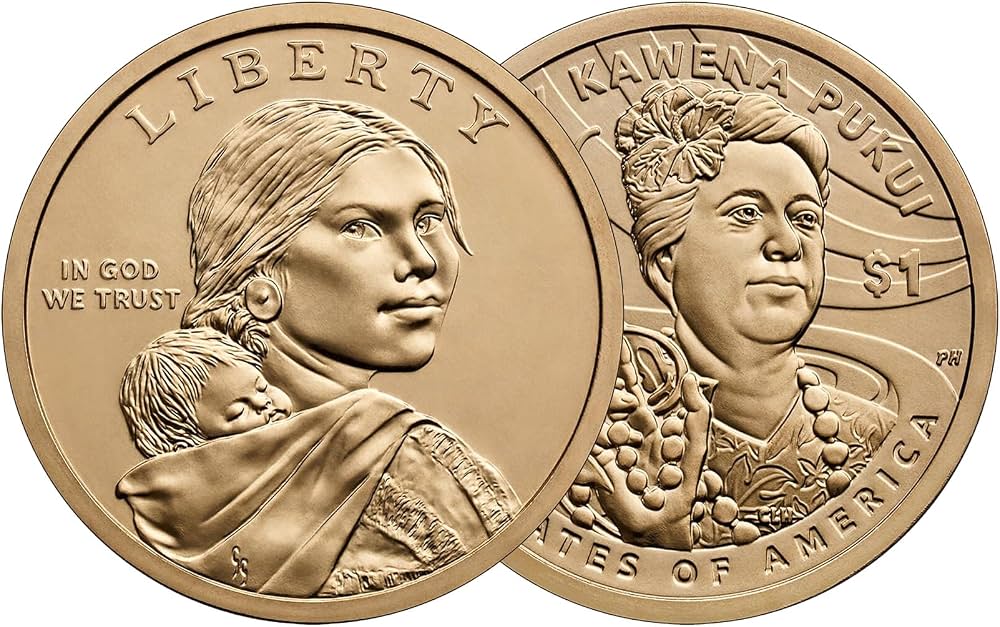
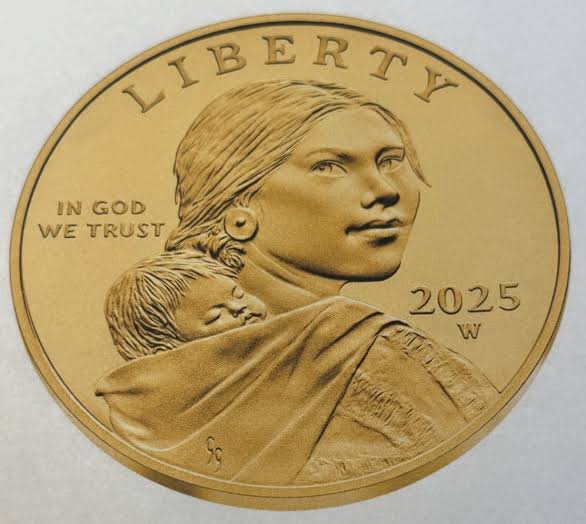
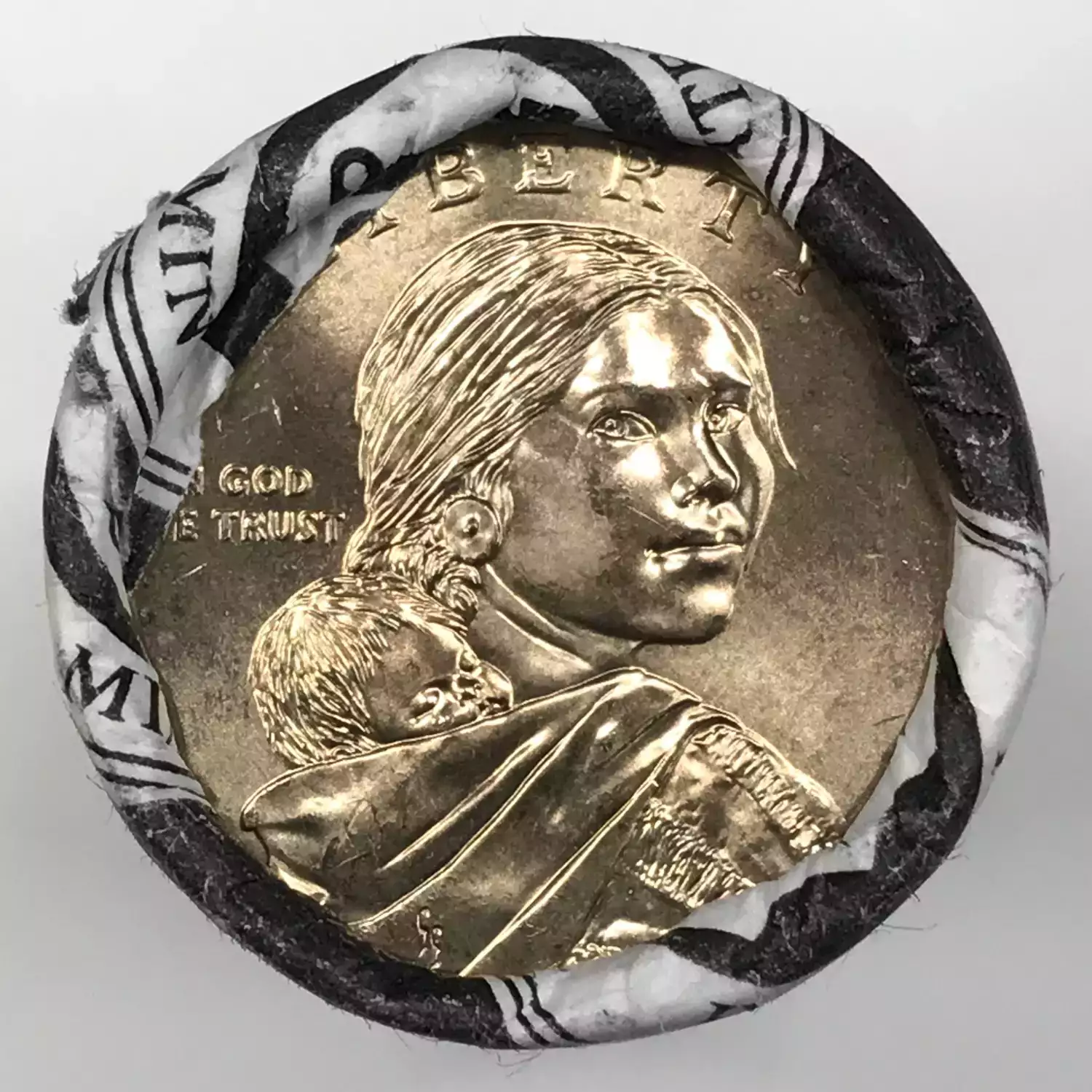
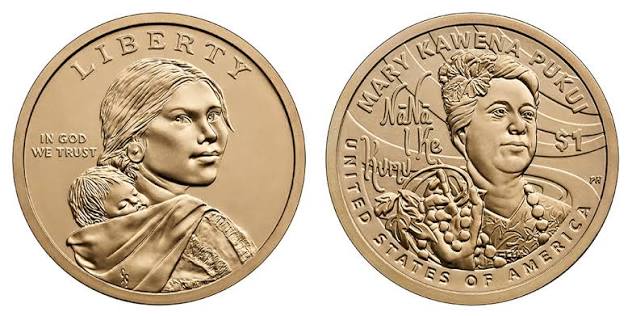
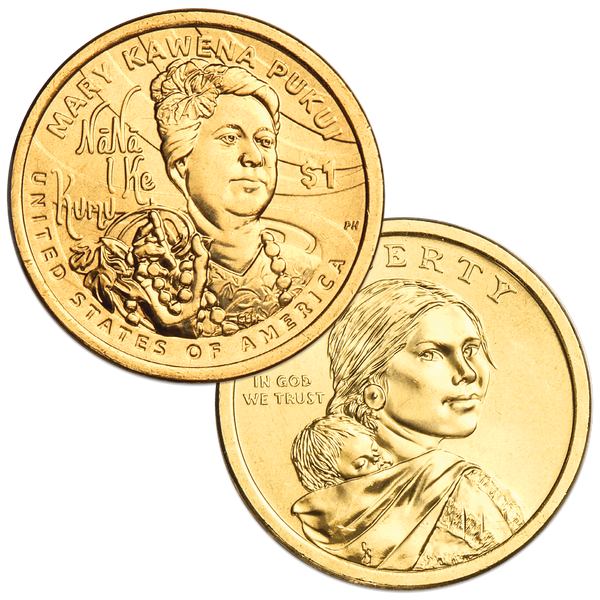
The 2025-W 25th Anniversary proof dollar has reached $2,390 in PR69 — while a standard 2025 Sacagawea dollar from your change is worth just $1. Understanding which coin you have (and what condition it's in) is the difference. This free tool covers every 2025 dollar variety: the P and D Native American dollars, the S proof, the W DCAM, and the 2025 Morgan silver dollar.
Select your mint mark, condition, and any errors to get an instant value estimate.
If you're not yet sure of your coin's mint mark, condition, or errors, a 2025 Sacagawea Dollar Coin Value Checker lets you upload photos and get an AI-powered identification before using the calculator above.
The 2025 Sacagawea dollar comes in two edge-lettering orientations. Position B — where the edge text reads normally when the portrait faces up — is one of the most-searched features on modern dollar coins. Both positions carry the same dollar value in most grades, but registry collectors pursue both variants. Use this checker to confirm exactly what you have.
Now that you've identified your edge lettering, run the full value calculator to get a grade-based estimate.
Jump to any section — all tools and guides are free.
Modern U.S. Mint quality control is rigorous, but errors do escape — and when they do on a low-mintage numismatic issue like the 2025 Native American dollar, collector demand quickly drives prices into significant premiums. Below are the most important error varieties to know for 2025 dollar coins, ranked by collector value and diagnostic importance.
The missing edge lettering error occurs when a planchet passes through the Schuler edge-lettering machine without receiving the incuse inscription. On the 2025 Native American dollar, the edge should bear the date "2025," the mint mark letter, and "E PLURIBUS UNUM." When all of this is absent, the resulting coin is a blank smooth edge — one of the most dramatic mint errors in the dollar series.
Visual identification is straightforward: roll the coin slowly between your fingertips under a strong light source. A normal coin will show clearly impressed lettering; an error coin's edge will be completely smooth, like a planchet blank, with no trace of inscription anywhere around its circumference. Even partial missing lettering — where sections of the motto are absent — represents a lesser but still collectible variety.
Certified examples command strong premiums because the error is visually unambiguous and easily authenticated by PCGS or NGC. The 2009 Native American dollar with a missing edge lettering error sold for just under $10,000 at auction, demonstrating the floor for this error type in the series. The 2025 example, being a very new and still-developing market, commands premiums in the hundreds to low thousands depending on grade and completeness of the missing lettering.
A struck-through error results when a foreign object — a piece of cloth, wire, grease, or other debris — is caught between the die face and the planchet at the moment of striking. The obstruction prevents the die from fully impressing that portion of the design, leaving a depression, smeared area, or raised mound depending on the nature of the material involved.
On 2025 Silver Eagles, struck-through errors have been authenticated and certified by NGC at MS69, with examples appearing on the market priced around $450. The error is most visually striking when it affects a prominent design element such as Sacagawea's cheek, the eagle's wing, or the open field areas where the absence of full detail is immediately apparent. Look for an irregularly shaped depressed zone with smooth bottom surfaces and sharply defined edges.
Value is driven by the size, location, and drama of the obstruction. A grease-filled die struck-through that blurs just a small portion of the rim is a modest premium. A large cloth or wire struck-through that obliterates a significant portion of the portrait or reverse eagle is a major error commanding several hundred dollars certified. Authenticated examples on 2025-dated coins are already confirmed in the market.
An off-center strike occurs when a planchet is misaligned between the dies at the moment of striking. Rather than the design being perfectly centered within the coin's circumference, the full design impression is pushed to one side, leaving a blank crescent of unstruck planchet on the opposite edge. The greater the percentage of off-center displacement, the rarer and more valuable the coin.
On 2025 dollar coins, the diagnostic feature is a visible blank arc on one side of the coin where the die never contacted the metal. Collectors measure off-center strikes as a percentage: a 5% off-center shows only a thin sliver of blank metal, while a 20% or 50% example is dramatically asymmetric. For the Sacagawea dollar, examples that retain the complete date (2025) despite being off-center are especially desirable because the date confirms attribution.
Premium values apply to off-center strikes of 15% or more where the full date is visible. These pieces are immediately eye-catching and require no magnification to appreciate. Because all 2025 dollar coins are minted for collector sets (not general circulation), any off-center that escaped quality control represents a genuine mint failure. Authentication by PCGS or NGC confirms the error occurred at the mint rather than through post-mint damage.
Die cracks form when the hardened steel working die develops a fracture from the repeated stress of striking thousands of planchets. As the crack deepens, metal from each newly struck planchet flows into the fracture, producing a raised line on the finished coin's surface. A die cud is a more advanced stage where a section of the die actually chips away entirely, leaving a raised, irregular blob — usually at the coin's rim — where the die surface was missing.
On 2025 dollar coins, die cracks appear as raised, irregular lines crossing the design or field areas. Under a 10× loupe, you can trace the crack's path, which will be raised above the surrounding surface unlike a scratch (which is recessed). Die cuds typically appear as a raised, formless mass at or near the rim where the die fragment was lost. Both varieties are genuine die-state errors, not post-mint damage.
While die cracks carry modest premiums — usually $10 to $75 depending on size and location — they are the most accessible error variety for beginning collectors because they can be found without special tools. A dramatic crack crossing the full diameter, or a large cud consuming a major design element, can command prices at the higher end of the range. These coins are popular as entry-level error pieces that demonstrate the minting process visually.
| Variety | Mint | Finish | Mintage | Distribution |
|---|---|---|---|---|
| 2025-P Native American Dollar (Position A & B) | Philadelphia | Uncirculated (numismatic) | ~2,520,000 | Collector sets & bags |
| 2025-D Native American Dollar (Position A & B) | Denver | Uncirculated (numismatic) | ~2,520,000 | Collector sets & bags |
| 2025-S Native American Dollar DCAM Proof | San Francisco | Proof (Deep Cameo) | Limited (numismatic only) | U.S. Mint proof sets |
| 2025-W Native American Dollar 25th Anniv. DCAM | West Point | Proof (Deep Cameo) — special issue | Limited (numismatic only) | U.S. Mint direct sale |
| 2025 Morgan Silver Dollar (No Mint Mark) | Philadelphia | Uncirculated — .999 fine silver | Limited (numismatic only) | U.S. Mint direct, $169 issue price |
| Combined P + D Sacagawea (approximate) | ~5,040,000 | Numismatic sets only (no circulation) | ||
Run the value calculator with the error box checked to get a grade-based estimate for your specific find.
Unsure which variety you have? Describe what you see — mint mark, edge lettering, surface condition, anything unusual — and get a tailored analysis.
The table below consolidates value ranges for every major 2025 dollar variety across all condition tiers. For a deeper walkthrough that helps you identify and recognize each 2025 Sacagawea dollar variety step by step, the full illustrated breakdown on CoinValueApp covers strike diagnostics and registry competition in detail. Signature variety row is highlighted in gold; the West Point proof row is highlighted for its exceptional premium range.
| Variety | Worn / AU | Uncirculated (MS60–65) | Gem / Top Pop (MS67+) | Proof (PR60–70) |
|---|---|---|---|---|
| 2025-P Position B ⭐ | $1 – $3 | $4 – $11 | $80 – $150+ | — |
| 2025-P Position A | $1 – $3 | $4 – $11 | $80 – $150+ | — |
| 2025-D Position A | $1 – $3 | $4 – $11 | $80 – $150+ | — |
| 2025-D Position B | $1 – $3 | $4 – $11 | $80 – $150+ | — |
| 2025-S DCAM Proof | — | — | — | $2 – $32 |
| 2025-W 25th Anniv. DCAM 🔥 | — | — | — | $500 – $2,390+ |
| 2025 Morgan Silver Dollar | — | $169–$237+ | $250+ | — |
| Missing Edge Lettering Error | $200+ | $400 – $800 | $800 – $1,500+ | — |
| Struck-Through Error | $100+ | $150 – $300 | $300 – $450+ | — |
⭐ Signature variety (Position B) · 🔥 Highest premium variety. Values based on PCGS/NGC market data and active 2025–2026 auction results. Always verify with a current price guide before buying or selling.
🪙 CoinHix lets you photograph your 2025 dollar and instantly cross-reference its grade against active market listings — a fast on-the-go way to estimate value before you commit to buying or selling. — a coin identifier and value app
Grading a 2025 Native American dollar is easier than grading a classic coin because most examples never circulated — they went directly from mint bags into collector hands. The key is assessing contact marks, luster quality, and strike sharpness. Grading services like PCGS and NGC use the 70-point Sheldon scale.
Dollar coins haven't circulated since 2011, so true wear is rare. AU (About Uncirculated) examples show only slight friction on the highest points of Sacagawea's hair and cheekbone. The coin retains most original luster. Value: $1 – $3.
No wear, but multiple contact marks from handling or bag friction are visible. Luster is present but may be slightly impaired. Sacagawea's cheek and forehead often show small bag marks. Value: $4 – $7 certified.
Fewer and smaller contact marks; luster is strong and cartwheel-type flow is visible when tilted under light. Above-average strike with most design details sharp. Sacagawea's portrait shows clean fields around the cheek. Value: $8 – $24+ certified.
Near-perfect surfaces — only one or two trivial contact marks at most under magnification. Full original luster with strong cartwheel. Strike extremely sharp across the full design. MS69 examples reach $115+; registry-set-quality MS70 can reach $2,198+ per market data. Value: $80 – $2,200+.
📱 CoinHix helps you match your coin's surface quality against thousands of graded examples, making it easier to estimate whether your 2025 dollar qualifies for MS65 or higher before paying for a professional submission. — a coin identifier and value app
The right venue depends on what you have. A standard MS65 Sacagawea dollar sells best through eBay or a coin club. A certified error coin or a top-pop MS69 belongs at Heritage or Stack's Bowers where specialist bidders compete.
The largest numismatic auction house. Best for certified error coins, 2025-W DCAM proof dollars, and any coin with a known registry-set grade (MS68, MS69, MS70). Heritage reaches global specialist bidders who will pay full market value for top-tier pieces. Consignment fees apply, but realized prices typically exceed other venues for premium coins.
Ideal for MS63–MS66 certified 2025 Sacagawea dollars, bulk mint-set coins, and error coins with modest premiums. To price your coin realistically, check recently sold prices for 2025-P Position B Sacagawea dollars on completed eBay listings before setting your ask. Filter by "Sold items" to see actual transaction prices, not wishful asking prices.
Quick, no-fee sales. Best for face-value or near-face-value coins (MS60–63 examples) where shipping costs would eat into profit. Local dealers typically pay 50–70% of retail for common modern dollars but offer instant liquidity. Bring your coin in a protective holder and know your floor price before you walk in.
Peer-to-peer sales with no auction fees. Works well for mid-grade certified examples where you know the exact market value and want to avoid eBay fees. Post clear photos of both sides and the edge lettering. The numismatic community here is knowledgeable and can spot artificially enhanced coins — authenticity and transparency are non-negotiable.
The 10 most common questions about 2025 silver dollar values, answered with data from PCGS, NGC, and current market records.
A circulated 2025 Sacagawea (Native American) dollar is generally worth face value — $1.00 — in grades up through About Uncirculated (AU50). Since dollar coins were removed from general circulation after 2011, most 2025 examples are found in collector sets or bank rolls and haven't seen much actual use. Even a lightly worn example trades at $1 to $3, only a small premium above face value.
Position A and Position B refer to the orientation of the edge lettering relative to Sacagawea's portrait. On a Position A coin, the edge inscription reads upside-down when the obverse faces up. On a Position B coin, the text reads right-side-up. Both orientations occur randomly during the Schuler edge-lettering process after striking and carry identical market values — the difference is purely a completionist detail for collectors who want both.
The 2025-W 25th Anniversary DCAM (Deep Cameo) Sacagawea proof dollar is sold exclusively through the U.S. Mint in special sets. Values for certified examples range from around $500 at PR60 up to approximately $2,390 at PR69 based on current market data. The West Point Mint's proof finish produces sharp design relief with frosted devices against mirror-like fields, making these coins highly desirable for registry set collectors.
No. The 2025 Native American (Sacagawea) dollar is not made of silver. It is composed of 88.5% copper, 6% zinc, 3.5% manganese, and 2% nickel — a manganese-brass alloy bonded to a pure copper core. Despite the golden color, there is no precious metal content. The 2025-W Silver Eagle and 2025 Morgan dollar are the true silver issues of the year, struck in 99.9% fine silver.
Known error types for 2025 dollar coins include: missing or weak edge lettering (the date, mint mark, and motto should appear on the edge), struck-through errors (foreign material between die and planchet), off-center strikes, die cracks, and die cuds. Struck-through errors on 2025 Silver Eagles have also appeared certified by NGC and PCGS. Missing edge lettering is among the most dramatic and valuable, as it affects the edge inscription entirely.
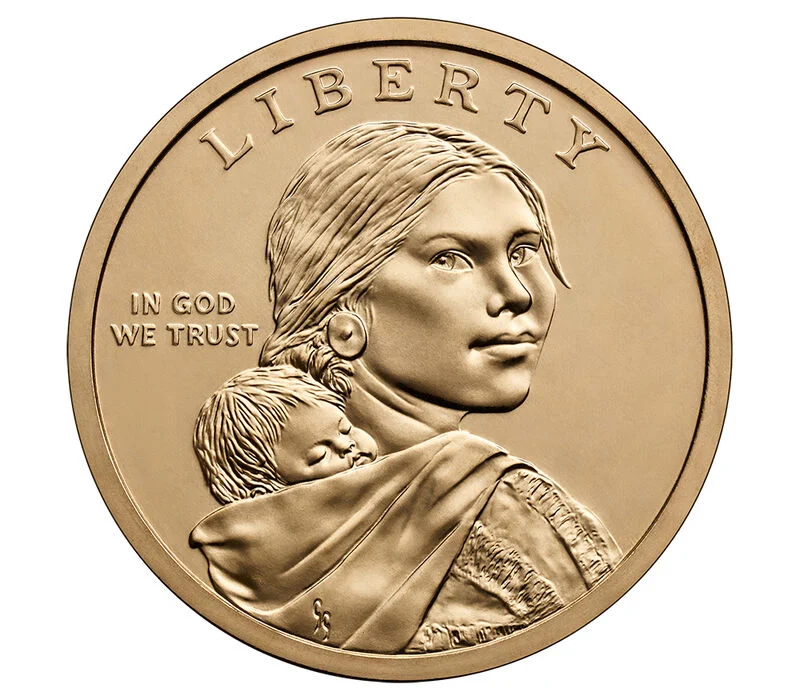
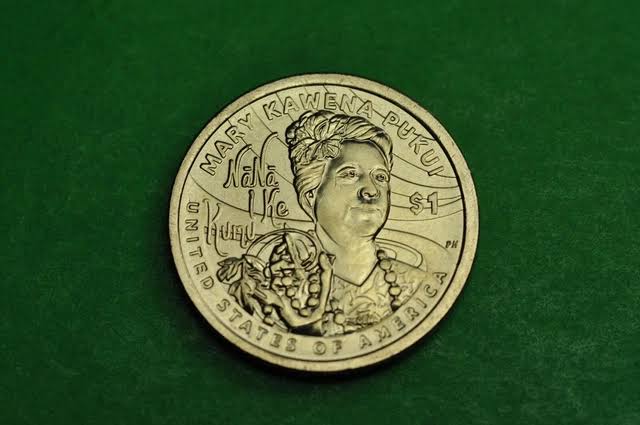
The 2025 Native American dollar reverse honors Mary Kawena Pukui, a Native Hawaiian scholar, linguist, folklorist, author, and cultural translator. Pukui was instrumental in preserving and revitalizing the Hawaiian language and culture. The design, part of the ongoing Native American $1 Coin Act program, changes annually to celebrate Native Americans' contributions to the United States. The obverse retains Glenna Goodacre's original Sacagawea portrait used since 2000.
The mint mark on a 2025 Sacagawea dollar is located on the coin's edge, not the obverse or reverse. Look for the date (2025), the mint mark letter (P for Philadelphia, D for Denver, S for San Francisco, W for West Point), and the motto E PLURIBUS UNUM running along the edge. You may need to roll the coin gently between your fingers or tilt it under a light source to read the incuse edge lettering clearly.
Several factors add collector premium: a high numerical grade (MS67+) certified by PCGS or NGC, a proven mint error such as a struck-through or missing edge lettering, the 2025-W 25th Anniversary proof designation, early release or first day of issue label from the grading service, and pristine surface quality with no contact marks on Sacagawea's cheek or forehead. Registry-set competition for top-pop examples at MS68 and MS69 drives the strongest premiums.
The 2025-P (Philadelphia) and 2025-D (Denver) Native American dollars were each minted in quantities of approximately 2,520,000 pieces, produced for numismatic collector sets rather than general circulation. Dollar coins have not been struck for general circulation since 2011. Proof versions from San Francisco (2025-S) and the 25th Anniversary proof from West Point (2025-W DCAM) carry much lower mintages and are sold directly by the U.S. Mint.
Never clean a 2025 dollar coin. Cleaning — whether with polish, soap, abrasives, or even running water — removes the original mint luster and microscopic surface texture that graders use to assess quality. A cleaned coin is identified immediately by PCGS or NGC and receives a details grade (e.g., MS64 Details — Cleaned), which dramatically lowers its market value compared to an original-surface coin at the same grade. Store your coin in a non-PVC flip or airtite holder instead.